
CEFR
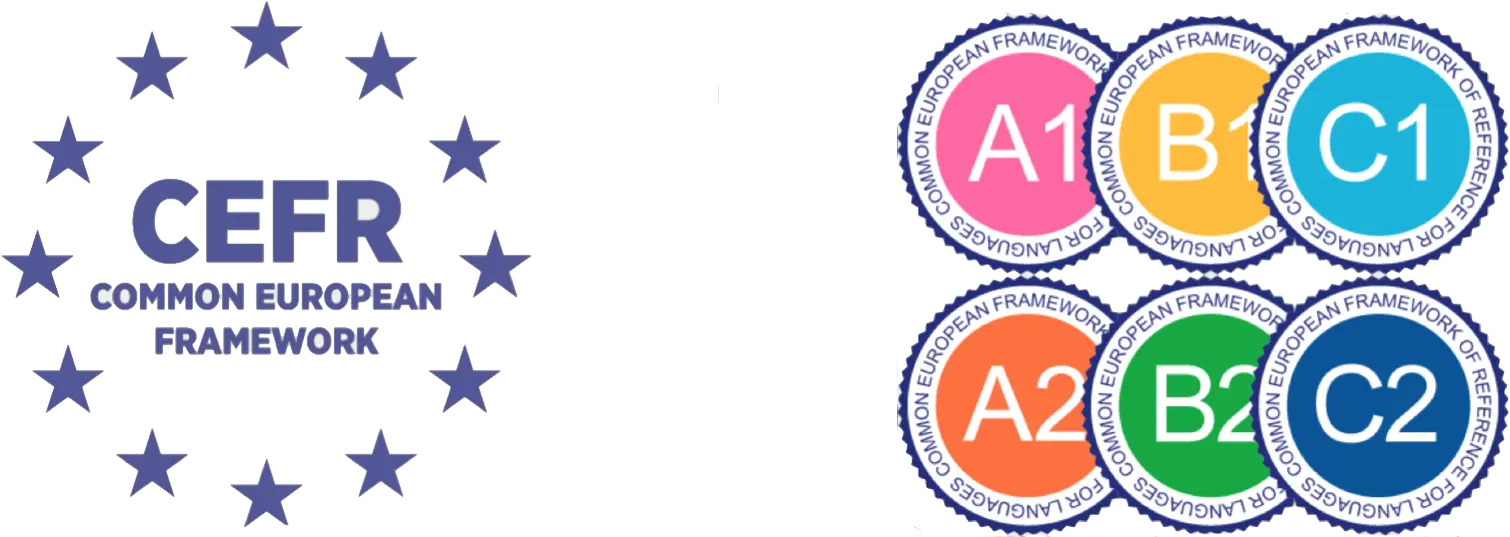
The CEFR (Common European Framework of Reference for Languages) is an international standard used to describe and measure language proficiency. Established by the Council of Europe, it evaluates skills across reading, writing, listening, and speaking, categorizing abilities into six clear levels so employers and educators can easily assess fluency.
The Six CEFR Levels Explained
The framework is divided into three broad categories and six specific levels:
- Basic User (A1 & A2)
- A1 (Beginner): You can understand and use basic, everyday expressions and very simple phrases. You can introduce yourself and ask/answer basic personal questions.
- A2 (Elementary): You can understand frequently used sentences and communicate in simple, routine tasks requiring direct exchanges of information.
- Independent User (B1 & B2)
- B1 (Intermediate): You can understand the main points of clear, standard input on familiar matters (work, school, leisure). You can handle most travel situations and write simple texts.
- B2 (Upper-Intermediate): You can understand the main ideas of complex text. You can interact with native speakers with a degree of fluency and produce clear, detailed writing.
- Proficient User (C1 & C2)
- C1 (Advanced): You can understand a wide range of demanding, longer texts and recognize implicit meaning. You can express ideas fluently and use language flexibly for social, academic, and professional purposes.
- C2 (Mastery): You can easily understand virtually everything heard or read. You can summarize information from different spoken and written sources, reconstructing arguments and accounts in a coherent presentation.
Why the CEFR Matters
Global Recognition: It acts as a universal “language translator” for resumes, university admissions, and visa applications globally.
Standardized Testing: Most major language tests align their scoring with CEFR levels (e.g., matching a C1 score to equivalent IELTS or TOEFL benchmarks.